




Flood protection has traditionally been associated with substantial structures: concrete walls, steel barriers, flood gates and other engineered defences designed to hold back rising water.
But as flood resilience becomes an increasingly important consideration for buildings, infrastructure and public spaces, there is another challenge to consider: how can properties be protected without compromising the appearance or function of the environment around them?
Structural glass flood barriers are permanent flood defence systems that combine high-strength laminated glass with SentryGlas® interlayers, engineered frames, structural anchoring and high performance seals to resist floodwater while maintaining visibility and reducing visual intrusion.
At first glance, a glass flood wall may appear relatively simple: transparent panels provide a physical barrier between floodwater and the property or space behind them but in reality, the glass almost always forms part of a wider engineered flood defence system.
A flood defence must withstand the forces created as water levels rise, therefore the glass works alongside supporting frames, anchoring systems, seals and foundations, with the complete system designed around the static and impact loads specified on each project.
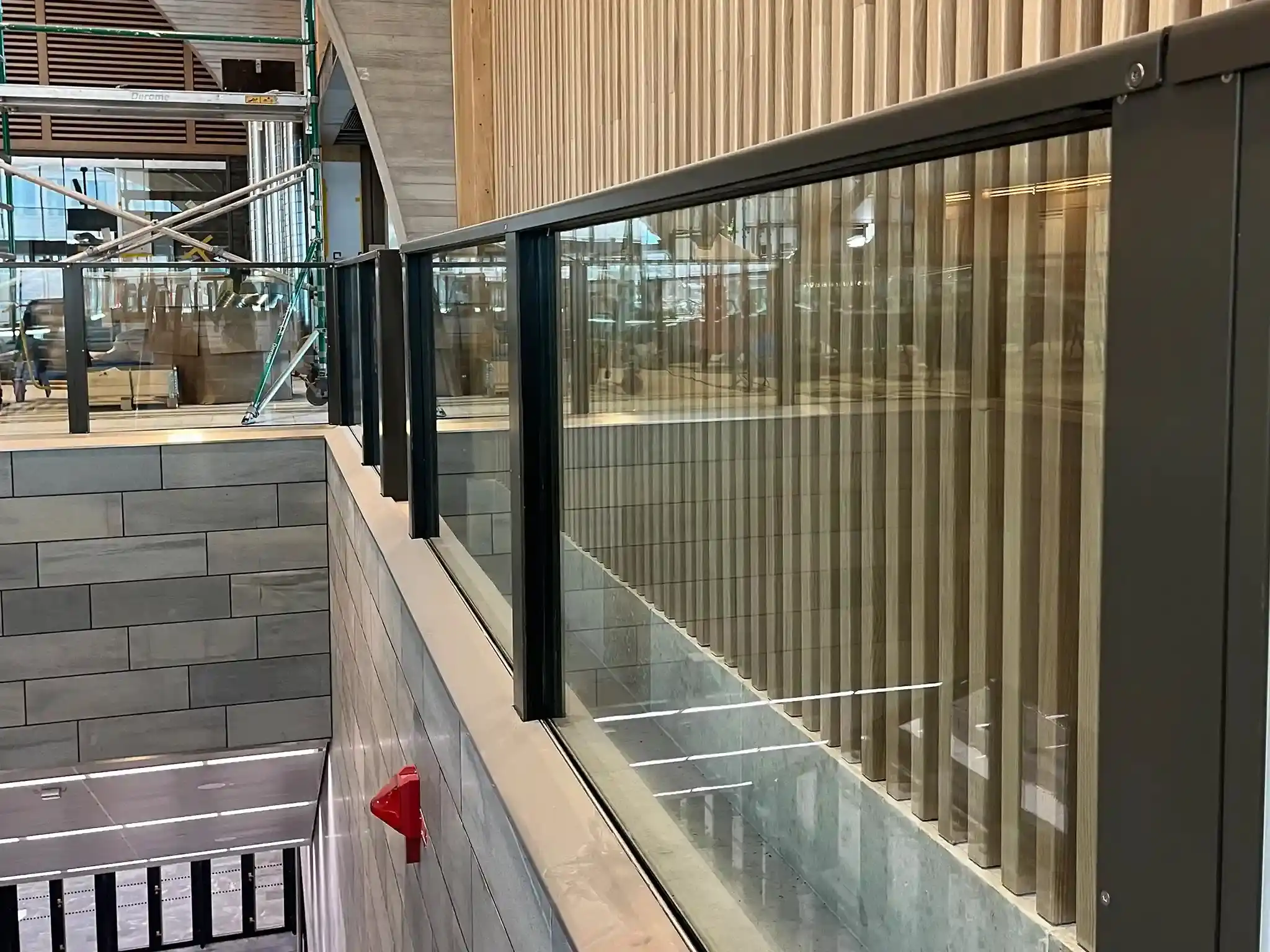
Floodwater can create significant hydrostatic pressure, while some locations must also account for potential impact from floating debris, e.g tree trunks from further upstream. For this reason, the design of a glass flood wall cannot be separated from its supporting structure and foundations.
Key engineering components include:
The required glass specification, frame design, anchoring and foundation details therefore need to be considered together as part of one engineered flood protection system.
Not all glass is suitable for this demanding application. Glass used within a flood defence must be specified as part of an engineered system, taking account of strength, safety, loading conditions and its interaction with the supporting structure.
This is where high-performance material expertise becomes important. Kuraray Europe GmbH supplies advanced structural interlayer technologies including SentryGlas® ionoplast interlayers and Trosifol® PVB solutions for systems developed by FCI, bringing specialist material science into flood protection engineering.
“SentryGlas® has a long history of helping buildings withstand extreme weather. Originally developed for hurricane-resistant glazing to resist windborne debris impact, its structural properties also support engineered flood protection against hydrostatic pressure and impact from waterborne debris. By transferring shear between glass plies, the ionoplast interlayer increases composite action and effective bending stiffness, reducing deflection under sustained water loading. Using stiffness values appropriate to the design temperature and flood duration, engineers can optimise glass thickness, panel dimensions and support conditions to control stresses, deflections and movement at the interfaces between glass, frames and seals, playing a pivotal role to the engineered solution.”
Allan Gibson, AIS Global Product/Marketing Segment Manager – Kuraray Europe GmbH

One of the main reasons to consider glass for flood protection is straightforward: visibility. Traditional solid flood walls can create a physical and visual separation between a property and its surroundings. In waterfront developments, public spaces, commercial properties and visually sensitive locations, maintaining views can be an important part of the design brief.
A glass flood wall can offer several advantages:
Temporary and demountable flood barriers can be highly effective where a site has the storage, personnel and warning time needed to deploy them. A permanent glass flood wall takes a different approach: once installed, the protection is continuously in position.
FCI’s glass flood wall system requires no deployment or storage and is specified with a design life of more than 50 years. This makes glass flood walls particularly relevant where continuous readiness, visibility and a long-term engineered solution are priorities.

As flood risk continues to shape property development and infrastructure planning, there is growing value in solutions that combine resilience with architectural, operational and public-realm requirements. Where permanent protection is required and preserving aesthetics or views is important, structural glass provides a proven engineered option.
It demonstrates that a flood defence does not necessarily need to be visually imposing to deal with demanding environmental conditions. The critical factor is that the glazing, frames, seals, anchoring and supporting structure are designed together around the flood loads and site conditions they may face.
Flood Control International’s system can be installed as a free-standing wall or incorporated as individual glazed panels within hard flood defences. Potential applications include:
FCI offers standard protection heights up to 1.6 metres, with bespoke engineering available to meet site-specific height and load requirements.
FCI’s Glass Flood Wall Barrier is independently tested and FM Approved to the FM/ANSI 2510 Flood Abatement standard. FM Approvals provides third-party product testing and certification, giving architects, engineers, asset owners and other specifiers independent evidence of tested performance.
For a wider explanation of certification and product selection, see FCI’s guide to choosing the right flood barrier.
The benefits of glass are particularly clear where flood protection and visual amenity need to work together. At Wells-next-the-Sea in Norfolk, Flood Control International worked with the Environment Agency to replace a seasonal timber-board defence with a permanent glass flood wall and sliding gate solution.
Completed in 2012, the scheme included a 1 metre high glass flood wall designed to maintain views across the harbour while helping protect approximately 500 properties. The glazed system was engineered to account for full hydrostatic pressure and impact loading, demonstrating how glass can combine flood resilience with the requirements of a visually sensitive waterfront location.
Read the full Wells-next-the-Sea glass flood wall case study.