



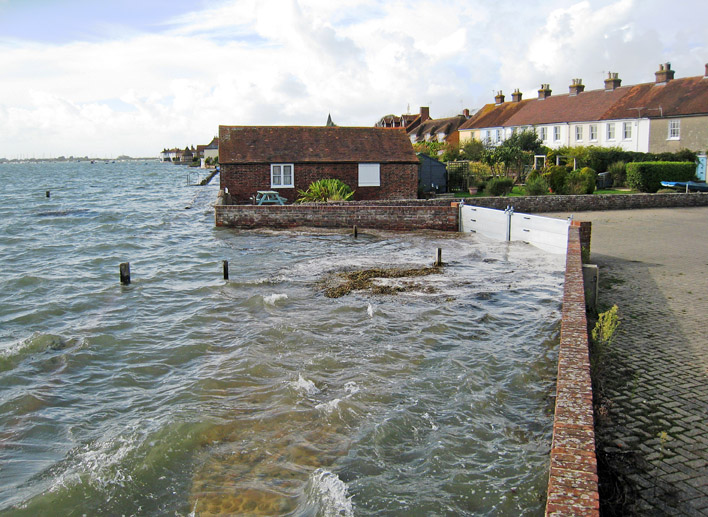
When it comes to flood protection, there is no single solution that works for every site.
A building entrance, loading bay, riverside property, infrastructure site and commercial development can all face very different flood risks, and the right flood protection system needs to reflect those differences.
The first step is not choosing a product. It is understanding the site.
How high could the floodwater reach? Which direction does it come from? How fast does it arrive? Does the opening need to remain in everyday use? Will someone be available to deploy the protection? Is visual impact a concern? Does the system need to operate automatically? And what happens if the site is unoccupied when flooding occurs?
At Flood Control International, we design and supply a wide range of flood barriers and flood gates, from removable slot-in systems to fully passive solutions. This means the flood protection can be designed around the requirements of the site, rather than forcing the site to adapt to a standard product.
So, what should you consider when choosing a flood protection system?
For some sites, permanent flood protection is not practical. A building entrance may need to remain completely open for vehicles or pedestrians. A public space may need unrestricted access most of the time. Or a site may only require flood protection during periods of increased flood risk.
In these situations, a demountable flood barrier can provide a flexible solution. Flood Control International’s FM Approved demountable barriers are designed to be fully removable when not required. The systems can be designed around individual openings and layouts, including corners, radiuses, steps and slopes. When the barrier is removed, the ground surface can be left completely clear and flat.
This can make demountable protection particularly suitable where flood resilience is required without creating a permanent obstruction.
Demountable systems can be highly effective, but they rely on someone being available to deploy them when required. That may be perfectly appropriate for a staffed site with a suitable flood warning and an established emergency procedure.
But what happens if there is nobody there? Or flooding occurs quickly? For critical infrastructure, commercial properties, remote sites or locations where flood warnings may provide insufficient time to react, an automatic barrier such as an automatic sliding floodgate or a passive flood barrier can remove the need for manual deployment.
Flood Control International supplies passive systems such as the Poseidon Up barrier that can be activated by the flood water itself. This distinction between manual and passive protection is an important part of the design process. The question is not simply, “Can this barrier stop the water?” It is also, “Will the barrier be in place when the water arrives?”
Flood protection does not have to dominate the appearance of a building or public space. For architects, developers, property owners and organisations operating in visually sensitive locations, the way a flood defence integrates with its surroundings can be just as important as its performance.
There are a number of ways to achieve this.
Glass flood barriers can provide flood protection while maintaining visibility and reducing visual intrusion. Recessed systems such as the Poseidon Up barrier can sit below the surface when not in use, leaving pedestrian and vehicle access unrestricted. FM Approved slot-ins can be removed completely when not in use, while certain flood gates can be integrated into the building or surrounding infrastructure.
This is where good flood protection design becomes more than simply putting a barrier in front of an opening. The objective should be to integrate resilience into the site, rather than compromise the way the site looks or operates.
A flood barrier should protect an opening without creating unnecessary problems for everyday operations. Consider how the opening is used: Is it a pedestrian entrance? Is it used by vehicles? Does it need to accommodate forklifts? Is disabled access required? Does equipment or machinery need to pass through? Is the opening used continuously throughout the day?
Different systems are suited to different access requirements.
Flood Control International’s flood gates, for example, can be designed to operate across level thresholds while maintaining vehicle, pedestrian and disabled access. Lift-hinge, swing-hinge, sliding and pivot gate configurations can be engineered for different site requirements.
The best solution is therefore not necessarily the barrier with the highest specification. It is the system that provides the required level of protection without preventing the site from functioning normally.
Flood protection needs to be designed around the actual conditions a site could experience. This includes more than simply calculating the height of the water.
Depending on the location and application, the design may need to consider: Expected flood depth, hydrostatic water pressure, debris impact, wave loading, ground conditions, opening dimensions, site geometry, duration of flooding or whether the area could become fully submerged
Flood Control International’s systems are individually engineered for their intended application, with design calculations and drawings available where required. This is why a site assessment is such an important part of selecting flood protection.
For some projects, independent certification is an important part of the specification process. FM Approvals provides independent assessment of flood protection systems against defined performance requirements. FCI has FM Approvals certified flood protection products, including demountable and glass flood barrier systems.
Flood protection should be designed around the site and people
The most effective flood protection is not simply about choosing a barrier that can hold back a certain height of water. It is about understanding how the site works and designing a system that protects it without unnecessarily affecting how people use it.
For one site, that could mean a fully removable slot-in barrier. For another, it could mean a glass flood wall that maintains visibility. Elsewhere, a passive barrier may provide the reassurance needed when there is no one available to deploy it. At Flood Control International, our role is to understand those requirements and develop a flood protection solution around them.
Flood protection should be designed around the site and the people.
If you are considering flood protection for a new development, existing building or critical infrastructure site, our team can discuss the available options and help identify the most appropriate solution.
Contact Us | Explore Flood Control International’s flood protection solutions