The Waihou Valley flood control scheme was conducted between 1972 and 1997, at a cost of over $178 million. It was designed to put an end to flooding, such as that experienced in 1981, when Paeroa, in the North Island of New Zealand, suffered considerable flooding and over 2000 people were evacuated. When the 1981 flood hit the region, it took several months of cleanup, it was difficult getting in and out of Paeroa, and there was no power. In 1985 another devastating flood resulted in 3 fatalities and an estimated $6,000,000 worth of damage to businesses, homes and infrastructure. In addition, much of the Hauraki Plains are at or below mean sea level, so some areas would flood every high tide.
The Waikato Regional Council said it had always been ‘touch and go’ as to whether the moveable flood defences would be in place before the water came through.The council described the old system as ‘like constructing a Lego-type wall to hold back the floodwaters’; A barrier was constructed from various pieces of steel and wood, which were incredibly heavy, and took 10-12 staff up to an hour to build. So, Waikato Regional Council Officials sought a flood defence solution to protect people, buildings, infrastructure and farmland, mitigate widespread damage, but have the ability to be rapidly deployed when required.
Flood Control International was commissioned to design and build mechanical flood gates to limit the threat of flooding in Paeroa. The new sliding floodgates, which were installed in 2018, each weigh 7 tonnes, and are 10.8m wide and 2.7m high. The regional council said that with preparation and practice it would be able to have the gates sealed within just 20 minutes of staff arriving.
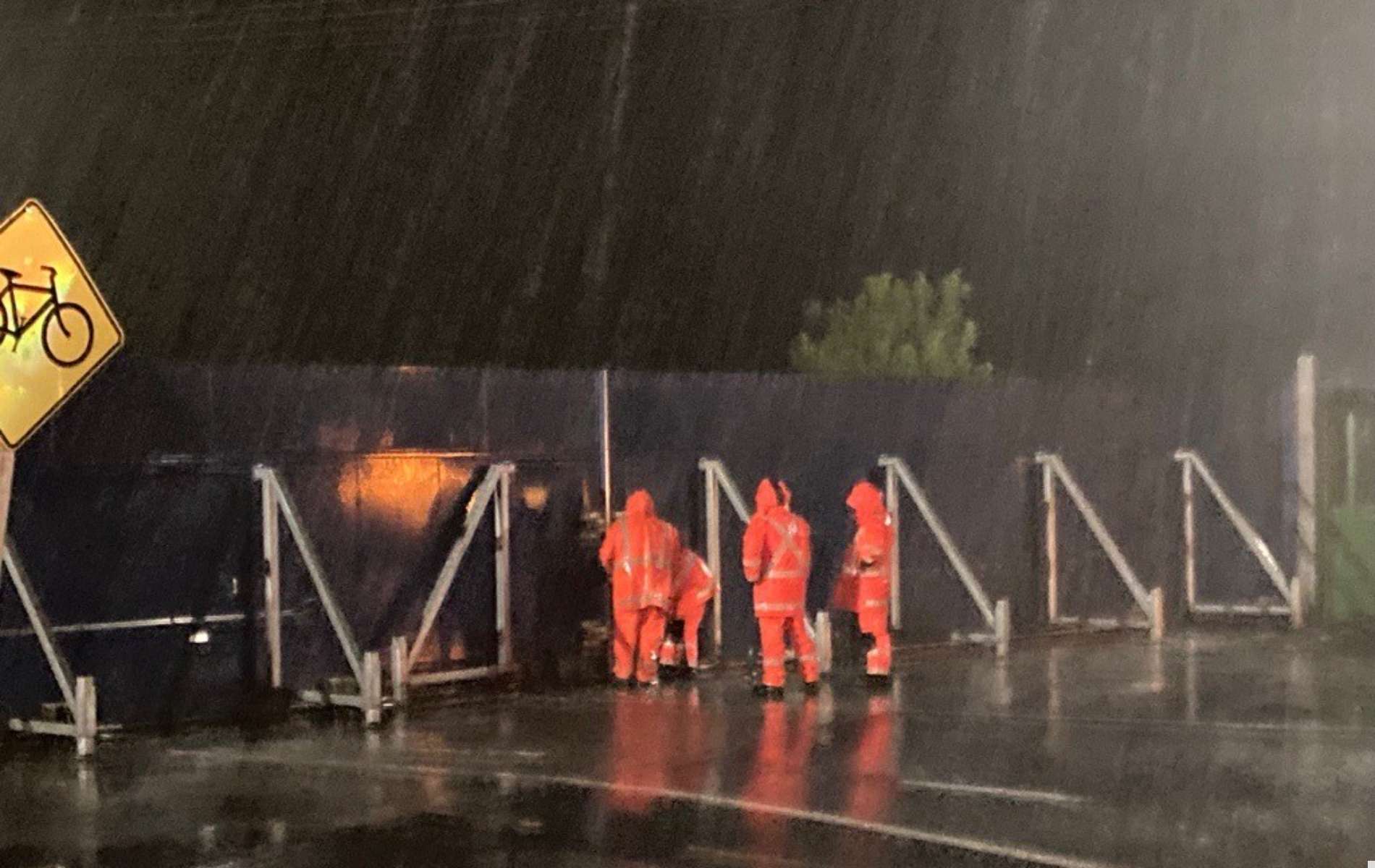
In early 2023, the Hauraki and Thames-Coromandel districts were hit with heavy rain, slips, surface flooding and road closures, during the storms of Auckland and Cyclone Gabrielle.The latter arrived in the early morning hours of Valentine’s Day, and warranted the sliding floodgates at Criterion Bridge, Paeroa, to be closed for the first time since they were installed in 2018.
Waikato Regional Council’s Flood Protection and Land Drainage Manager, Adam Munro, explained, “We got to close the Criterion Bridge floodgates for the first time since they were installed in 2018, so that was very rewarding to see how well that piece of engineering stood up to the job, holding back the Ohinemuri River from flooding the state highway, the school, properties and farmland”. He also added, “Infrastructure such as stopbanks and spillways mostly go unnoticed until you have
a really big event such as Gabrielle and Hale, and it’s then that people see them in action and really appreciate how much water they hold back… that’s when they’re really valued.”
Without the flood schemes in place, communities would simply not be able to function as they do on the Hauraki Plains. River level recorders in the Ohinemuri provide timely alerts on when flooding may occur. They recorded levels every five minutes, and this data is electronically sent to the regional council in real time. These notifications, along with modelling using weather forecasts, means the council know when to close the gates across SH26, before the river levels get too high. Floodwater from the river reaches 2+ metres height at its maximum.